Intro — why you should learn to scale mid-term rental portfolio
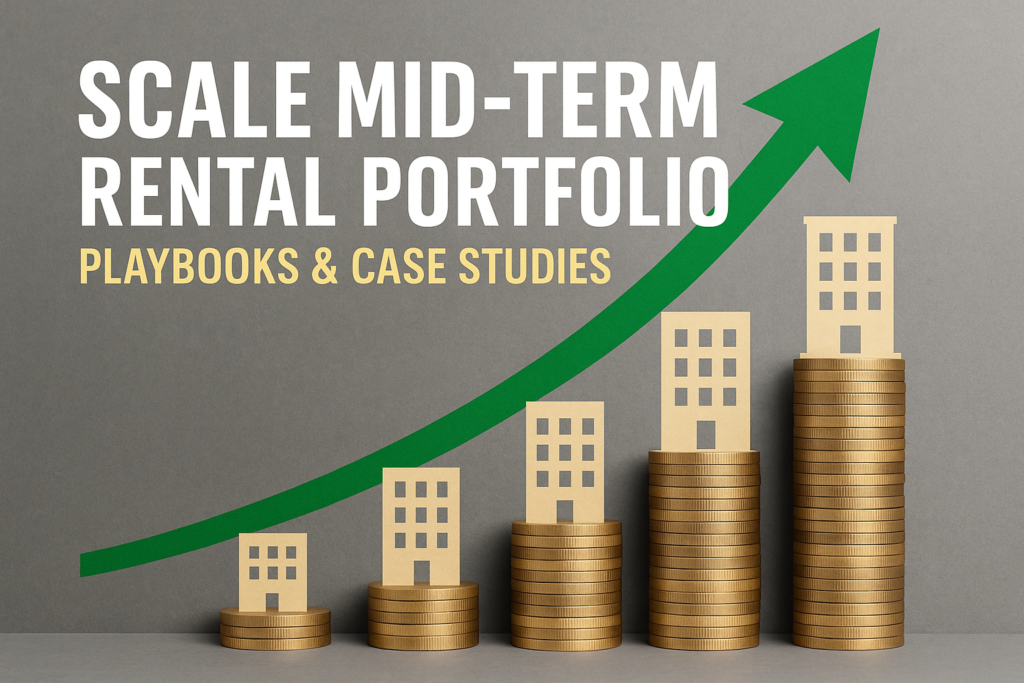
Growing from one unit to many is doable, but not automatic. This post breaks down playbooks, real-case decisions, financial checkpoints, and hires that let you scale mid-term rental portfolio without burning cash or reputation. Read this and get a repeatable plan.
The 1→5→10 playbook to scale mid-term rental portfolio
A simple roadmap you can follow.
Zero Phase — nail one unit (0–3 months)
- Standardize listing, photos, and pricing.
- Build SOPs for check-in, cleaning, and maintenance.
- Track occupancy, net revenue, and turnover cost.
Goal: 75–85% occupancy and positive monthly cash flow.
First Phase — duplicate (3–6 months, add 2 units)
- Reuse listing templates and SOPs.
- Automate booking → cleaner task.
- Hire one VA for messaging and bookings.
Goal: Aggregate occupancy 70–85%, test channel mix.
Second Phase — systematize (6–12 months, add 3–5 units)
- Add PMS or channel manager.
- Outsource bookkeeping.
- Hire an ops lead or regional cleaner team.
Goal: Consistent 80%+ occupancy; SOPs used reliably.
Third Phase — scale (12–24 months, reach 10+ units)
- Standardize contracts, insurance, and vendor rates.
- Consider forming an LLC or investment partner for capital.
- Use revenue forecasting and KPIs to underwrite new acquisitions.
Goal: 10 units at target NOI per unit and predictable monthly cash flow.
Case study snapshot — single-owner, 3-city rollout
Quick example (numbers rounded):
- Unit A (city with demand): Bought 1BR, furnished $4k, rents $2,600/month, occupancy 85% → NOI $1,100/month.
- Unit B (copy A): Replicated SOPs, automated messaging, found a local cleaner. Occupancy moved to 80%.
- Unit C (different city): Used local partner + MiniStays listing to test demand. Took 3 months to hit 70% occupancy.
Key learning: replicate what works locally, then test one market before full roll-out. Use the same SOPs, adjust price tiers, and keep a 10–15% vacancy buffer.
Financial model — what to underwrite before adding a unit
Run the numbers before you buy or list.
- Acquisition costs: deposit, furnishing, initial supplies.
- Monthly fixed: mortgage/lease, insurance, platform fees.
- Monthly variable: cleaning per turnover, utilities, maintenance reserve.
- Vacancy buffer: assume 10–15% downtime.
- Target NOI: 15–25% net margin after expenses and vacancy.
Simple underwriting rule: add a unit only if projected NOI covers financing cost and meets your target return within 12 months.
Operations playbook to scale mid-term rental portfolio
Operations are your multiplier.
- SOPs: one-page checklists for listing, check-in, cleaner, and maintenance.
- Inventory management: photos + serial numbers + signed checklist at check-in.
- Vendor panels: 2 reliable cleaners per market + 1 handyman.
- Quality control: weekly QA for first 3 months of each new unit (photos + manager review).
- Customer service: canned replies for common issues + escalation path.
Document everything. Train a VA to follow the SOPs until you can hire a local ops lead.
Automation & tools that scale
Start with low-cost automation, then graduate to PMS.
- Small scale: Zapier/Make → booking → cleaner task → Google Sheet log.
- Mid scale: PMS (Hostfully, Lodgify, Guesty) for messaging, invoices, and tasking.
- Channel manager: sync availability and avoid double-booking across MiniStays, Airbnb, direct site.
- Accounting: QuickBooks Online + bank rules by unit.
- Reporting: Simple dashboard (occupancy, ARPU, NOI per unit).
Automate the boring stuff first — booking routing, cleaner scheduling, deposit holds, review requests.
Hiring & org chart for a growing portfolio
What to hire and when:
- VA (booking & messaging): 2–3 units.
- Cleaner (local contractor): per market.
- Bookkeeper/Accountant: 3–5 units.
- Ops lead / regional manager: 6–10 units.
- Head of operations (fractional or full-time): 10+ units.
Hire for outcomes, not hours. Pay per task for cleaners; pay for KPIs for ops leads.
KPIs to monitor when you scale mid-term rental portfolio
Track these weekly/monthly:
- Occupancy % (monthly rolling) — target 70–90% depending on market.
- Average monthly rate (ARPU) per unit (net after fees).
- Turnover cost per booking.
- Net Operating Income (NOI) per unit.
- Days to rebook after checkout.
- Lead-to-booking conversion rate.
- Customer satisfaction (NPS or review score).
Build a one-page dashboard and review it every week.
Financing options & capital strategies
How to fund growth without over-leveraging:
- Reinvest cash flow — slow but safe.
- Traditional mortgage or refi for owned units.
- Small business loan or line of credit for portfolio expansion.
- Joint ventures or private equity for faster scale.
- Seller financing or leases-to-own in some markets.
Always stress-test cash flow under a 10–15% vacancy assumption and a conservative ARPU.
Risk management & legal basics
Protect the business as you grow.
- Use a mid-term lease and consistent terms.
- Maintain adequate mid-term rental insurance and umbrella liability.
- Check local zoning, HOA rules, and tax obligations before you list.
- Keep an inventory and photo record to reduce damage disputes.
- Use clear screening criteria to avoid high-risk tenants.
Document policies and train your team on escalation.
Quick checklist — launch your second unit (7-day plan)
- Clone listing: photos, title, top bullets.
- Create a local SOP and cleaner agreement.
- Set up pricing tiers (30/60/90+ days) and a vacancy buffer.
- Build a Zap: new booking → cleaner task → log in Google Sheets.
- Add unit to accounting and create P&L skeleton.
Do these five things and you’ll avoid common early scaling mistakes.
Mini case study — timeline and actions (concise)
Owner A: 1 unit → 4 units in 10 months
- Month 0–2: solidified SOPs; 85% occupancy.
- Month 3–5: added 2 units using identical furnish list and SOPs; automated messaging.
- Month 6–10: hired VA and bookkeeper; added one more unit in a low-competitor neighborhood.
Result: portfolio net cashflow up 3.5x; owner outsourced day-to-day ops.
Key win: reuse, automate, and then hire when cashflow justifies payroll.
FAQs — scale mid-term rental portfolio
Q: How many units before I need a PMS?
A: Typically 3–5 units or when you list on multiple platforms.
Q: Should I list on multiple platforms?
A: Yes — diversify. Prioritize MiniStays for 30+ day demand, mirror on Airbnb and direct channels.
Q: What’s a safe occupancy target?
A: 70–85% depending on seasonality and city.
Related reading for hosts who want to scale mid-term rental portfolio
- Mid-Term Rentals Growth Playbook — Scale, Automate & Protect
- Mid-Term Rental Marketing & SEO — Get Booked Faster
- Mid-Term Rental Lease Agreement Checklist (30–180 Day Leases)
Final thought & CTA — start to scale mid-term rental portfolio
Scaling is a systems problem, not a hustle contest. Start by making the second unit run like the first — then duplicate that system. If you want an audience that prefers 30+ day stays while you scale, list on MiniStays. It targets furnished monthly guests and lowers mismatch risk. Start hosting on MiniStays →