Why Market Selection Drives Portfolio Performance
Capital grows faster when placed wisely. Poor placement creates drag.
A clear mid-term rental market selection process helps operators deploy capital with confidence and reduce downside risk. This guide supports the pillar Mid-Term Rental Portfolio Strategy: Capital, Growth & Exits, where long-term value depends on disciplined decisions, not guesswork.
Markets change. Demand shifts. Strategy keeps your portfolio aligned.
What Mid-Term Rental Market Selection Really Means
Market selection is not about hype.
It is about matching demand, regulation, and unit economics.
Strong mid-term rental market selection evaluates:
- Who stays in the market
- How long they stay
- What unit types they need
- How regulations affect supply
- Whether margins survive slow periods
Good markets stay profitable even when demand softens.
Start With Demand Drivers, Not Listings
Listings show supply. Demand drivers show opportunity.
Prioritize markets with:
- Hospitals and medical centers
- Corporate campuses and HQs
- Universities and research hubs
- Infrastructure or energy projects
- Insurance relocation demand
These drivers support longer stays and stable occupancy.
Regulation Shapes Market Viability
Rules matter more than popularity.
For mid-term rental market selection, confirm:
- Furnished rentals are allowed
- Minimum stay rules align with your model
- Licensing requirements are clear
- HOAs permit rentals
- Enforcement history is predictable
Avoid markets where rules change without notice.
Pricing Power and Length of Stay
Strong markets allow pricing control.
Weak markets force discounts.
Evaluate:
- Average monthly rates
- Typical stay length
- Extension frequency
- Fee tolerance by guests
Markets with stable 60–90 day stays protect cash flow.
Unit Mix: Match Supply to Demand
Not every unit works everywhere.
Unit mix must follow demand patterns.
Common matches include:
- Studios near hospitals
- One-bedrooms near corporate hubs
- Two- or three-bed homes for family relocations
A smart mid-term rental market selection balances unit sizes across the portfolio.
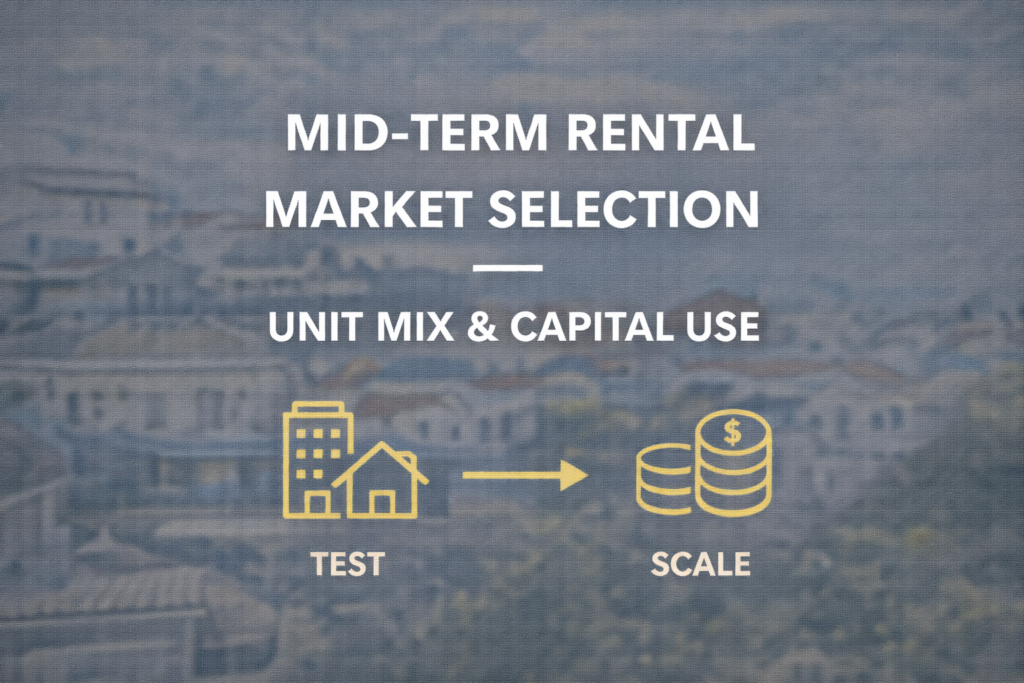
Testing New Markets Before Full Deployment
Testing reduces mistakes.
Small pilots reveal real data.
Before scaling:
- Launch one or two units
- Track occupancy and extensions
- Measure turnover costs
- Monitor guest feedback
Markets must earn more capital.
Using Data to Compare Markets Objectively
Emotion clouds decisions. Data clarifies them.
Track these metrics per market:
- Occupancy trend
- Net monthly revenue
- Average length of stay
- Turnover cost
- Extension conversion rate
Rank markets quarterly. Shift capital accordingly.
Market Sheets as Decision Tools
Market Sheets turn insight into action.
Each market sheet should include:
- Demand drivers
- Pricing benchmarks
- Regulation notes
- Vendor reliability
- Pilot results
These sheets anchor mid-term rental market selection decisions in facts.
How Marketplaces Help Validate Demand
Marketplaces offer early signals.
They reduce blind expansion.
Platforms like MiniStays.com help operators test mid-term demand, observe booking behavior, and validate pricing before committing larger capital.
Use marketplaces to learn, not to depend.
Scaling Winners Through Mid-Term Rental Market Selection
Not every market deserves growth.
Strong portfolios reallocate capital.
Scale markets that show:
- Stable occupancy
- Healthy extensions
- Predictable operations
Pause or exit markets that drain time and cash.
Portfolio Balance Using Mid-Term Rental Market Selection
Diversification reduces risk.
Overconcentration increases exposure.
A strong mid-term market selection strategy spreads assets across:
- Different regions
- Different demand drivers
- Different unit types
Balance protects returns during downturns.
When to Exit a Market in Mid-Term Rental Market Selection
Exits are strategic, not failures.
Exit when:
- Regulations tighten unexpectedly
- Margins shrink consistently
- Vendor quality stays low
- Demand weakens long term
Capital works best where friction stays low.
How Mid-Term Rental Market Selection Supports Portfolio Strategy
Market decisions shape exits, financing, and partnerships.
They sit at the center of Mid-Term Rental Portfolio Strategy: Capital, Growth & Exits.
Better markets create optionality.
Optionality creates leverage.
Final Call: Deploy Capital With Mid-Term Rental Market Selection Discipline
Growth rewards patience.
Strong mid-term market selection ensures every new unit strengthens your portfolio.
Study demand first.
Test before scaling.
Reallocate capital often.
Use tools, data, and signals from platforms like MiniStays.com to guide decisions—and let your portfolio grow with intention instead of noise.