ministays vs. Extended Stay America: 7 Cost & Flexibility Differences in 2026
An Extended Stay America alternative like ministays can be a better fit for travelers who need furnished housing for 30–90+ days. Extended Stay America offers hotel-style convenience and flexible long stays, while ministays focuses on monthly furnished rentals with a more residential experience. The best choice depends on total cost, flexibility, space, and how long you plan to stay.
What makes a good Extended Stay America alternative?
A strong Extended Stay America alternative should provide more than a place to sleep. For a 30-, 60-, or 90-day stay, cost, space, flexibility, and everyday livability become increasingly important.
Transparent monthly pricing. Travelers should be able to compare the real cost of an entire month rather than multiplying an advertised nightly rate and hoping the total fits their budget.
Move-in-ready furnishings. A practical mid-term property should include furniture, internet, essential appliances, and a usable kitchen so renters can arrive without setting up a household.
Flexible stay lengths. Corporate assignments, relocations, travel-nursing contracts, and home renovations rarely fit neatly into a 12-month lease.
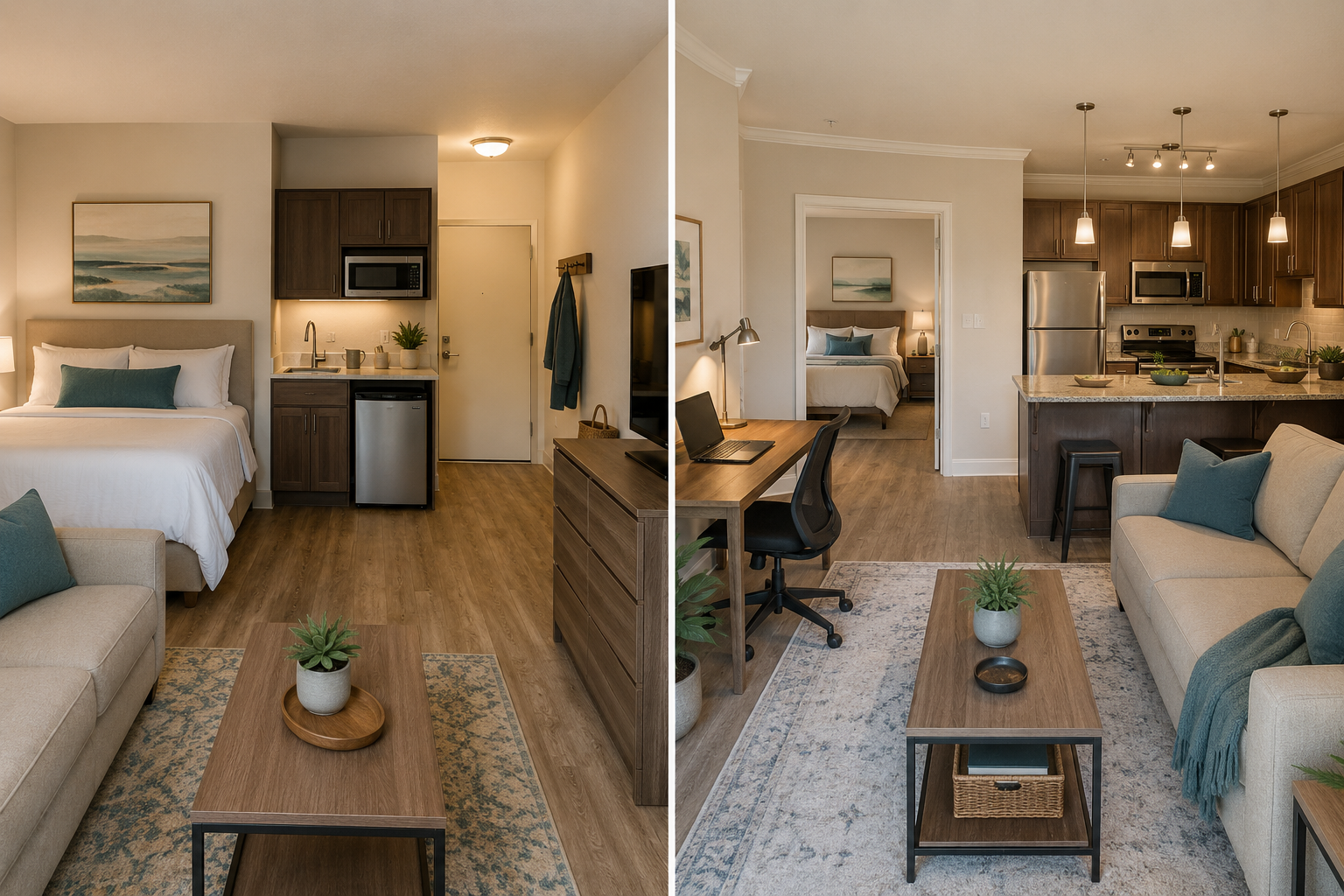
Enough space to actually live. A hotel room can work well for a week. For several months, many renters value separate sleeping, working, cooking, and living areas.
Predictable extra costs. Pet charges, cleaning costs, taxes, utilities, deposits, and payment fees can substantially affect the final price of a long stay.
For a broader look at furnished housing options, see our guide to mid-term rental platforms and alternatives.
ministays vs. Extended Stay America: Quick comparison
| Feature | ministays | Extended Stay America |
|---|---|---|
| Primary model | Furnished mid-term rental marketplace | Extended-stay hotel |
| Typical use case | 1–12 month furnished stays | Nights, weeks, months or longer |
| Accommodation | Homes, apartments and other furnished rentals | Hotel suites |
| Kitchen | Varies by property, intended for furnished living | Full kitchen in suites |
| Pricing structure | Monthly property pricing | Hotel rates discounted for longer stays |
| 30+ day pricing | Core platform use case | Special long-stay rates available |
| Utilities | Typically part of furnished-stay offering; check listing | Hotel utilities and Wi-Fi included |
| Housekeeping | Property-specific | Hotel housekeeping schedule/service varies |
| Pets | Property-specific | Pet-friendly, fees and restrictions apply |
| Best for | Renters wanting a home-like monthly stay | Renters prioritizing hotel convenience |
| Main advantage | More residential choice and MTR focus | Predictability and hotel infrastructure |
Extended Stay America currently says its properties offer apartment-style suites with kitchens and free Wi-Fi. Its long-stay pricing automatically provides special rate categories for stays of 7–14 nights, 15–29 nights, and 30+ nights.
ministays is purpose-built for furnished stays of one to 12 months and currently advertises monthly pricing without nightly markups or separate cleaning fees on its marketplace.
1. ministays is designed specifically for monthly furnished stays
Why it ranks / Best for: ministays is the stronger fit for renters who want temporary housing that functions more like a home than a hotel room. The marketplace is designed specifically around furnished stays lasting one to 12 months.
Property type: Depending on available inventory, renters can search residential furnished properties rather than limiting themselves to standardized hotel suites.
Stay length: ministays targets one- to 12-month bookings, while mid-term rentals commonly serve renters staying roughly 30–180 days.
Context: This setup is particularly relevant for corporate relocations, remote workers, travel nurses, military moves, insurance displacement, and families between permanent homes.
If you are new to this type of housing, our guide to mid-term rentals explains how furnished monthly rentals differ from traditional leases and short stays.
2. Extended Stay America wins for hotel-style simplicity
Why it ranks / Best for: Extended Stay America is attractive when you want to arrive, check in, and use familiar hotel infrastructure immediately. Its properties offer extended-stay suites with kitchens and free Wi-Fi, and the company operates hundreds of locations nationwide.
Hotel features: Kitchens, Wi-Fi, on-site guest laundry at many properties, standardized check-in, and hotel staff distinguish the experience from renting directly from an individual property owner.
Stay length: Extended Stay America markets accommodations for weekly, monthly, and longer stays.
Context: If your temporary assignment could suddenly end or your dates are uncertain, a hotel arrangement can feel easier than committing to a residential rental agreement. Always check the cancellation and modification terms attached to your specific rate before booking.
3. Cost depends heavily on the city and exact dates
Why it ranks / Best for: neither option is automatically cheaper because Extended Stay America rates and furnished rental prices vary by market, property, dates, and stay length.
Hotel pricing: Extended Stay America currently applies long-stay pricing when guests search for seven nights or more. Its standard “Stay Longer. Save More” promotion says qualifying 30+ night bookings can receive discounts of up to 45%, although availability and discounts vary.
Rental pricing: ministays presents furnished properties using monthly pricing and currently advertises no nightly markups or separate cleaning fees on its marketplace.
Context: Compare the complete stay cost, not the initial nightly or monthly figure. A 90-day decision should account for taxes, pet charges, parking, utilities, cleaning, laundry, deposits, and any other mandatory charges.
For a better understanding of how furnished monthly properties are priced, see this mid-term rental pricing guide.
4. ministays can offer more residential space
Why it ranks / Best for: furnished rentals can be more comfortable for renters who need separate bedrooms, workspaces, or living areas during a multi-month stay.
Property details: A residential MTR can include features such as multiple bedrooms, a dedicated living room, private laundry, parking, a yard, or a home office depending on the individual listing.
Number to consider: Over a 30-, 60-, or 90-day stay, usable square footage and bedroom count often matter much more than they do during a three-night hotel visit.
Context: Inventory is property-specific, so compare the actual listing against the exact Extended Stay America suite available in your destination rather than assuming every rental will be larger.
This is one of the central differences in the extended stay vs. rental decision: a hotel optimizes for hospitality, while a furnished rental usually optimizes for residential living.
5. Extended Stay America makes kitchens standard
Why it ranks / Best for: Extended Stay America offers a predictable cooking setup for travelers who do not want to investigate kitchen amenities property by property. The company states that its suites include kitchens, helping long-term guests prepare their own meals instead of relying entirely on restaurants.
Amenities: Extended Stay America markets full kitchens and free Wi-Fi as core extended-stay features. On-site guest laundry is also available at its hotels.
Stay length: Cooking at home becomes increasingly valuable on 30+ day assignments, particularly for workers traveling on a fixed stipend or per diem.
Context: A furnished rental may offer a larger residential kitchen, dining space, dishwasher, or additional appliances, but amenities vary by listing. Check the property description before booking.
6. Pet owners need to compare fees carefully
Why it ranks / Best for: Extended Stay America provides a predictable pet-friendly policy, while a furnished rental can sometimes offer more space or a more favorable property-specific arrangement.
Pet policy: Extended Stay America says its hotels are pet-friendly, subject to restrictions. Its current published policy allows a maximum of two pets per suite unless management approves otherwise and includes size limitations.
Pet fees: The company currently states that pet cleaning charges can be up to $25 plus tax per day for each pet during the first six nights, followed by charges of up to $15 plus tax per day thereafter. Exact charges should be verified for the selected property.
Context: With a monthly furnished rental, pet rules, deposits, and fees depend on the individual property. For a 60- or 90-day trip with a pet, compare total pet costs before deciding which accommodation is cheaper.
7. The best corporate housing alternative depends on your priority
Why it ranks / Best for: ministays is compelling when you want residential living, while Extended Stay America is compelling when you value hotel consistency and convenience.
Best for ministays: Relocations, travel assignments, remote work, temporary family housing, military moves, and other situations where a renter wants a furnished home for one or more months.
Best for Extended Stay America: Travelers who want hotel operations, predictable core amenities, simple check-in, or a stay that may be closer to a few weeks than several months.
Context: Neither model is universally better. The longer your trip, the more important it becomes to compare space, privacy, kitchen quality, laundry, parking, neighborhood, and total monthly cost instead of simply choosing the lowest advertised nightly rate.
Is ministays the better Extended Stay America alternative?
For many 30–90+ day renters, ministays can be a better Extended Stay America alternative when the priority is living like a resident rather than staying like a hotel guest. A furnished rental may provide more residential space, neighborhood choice, privacy, and room for work or family life.
Extended Stay America remains a strong option when hotel-style flexibility matters most. It offers kitchens, Wi-Fi, long-stay discounts, and weekly or monthly booking options without requiring renters to search individual residential properties for those basics.
The smartest comparison is therefore not simply “hotel versus rental.” Compare two real properties for your exact dates and calculate the total cost for the entire stay.
How to choose between an extended-stay hotel and a furnished rental
- Enter your exact dates. Compare a 30-, 60-, or 90-day stay rather than looking at a generic nightly rate or advertised starting price.
- Calculate the complete cost. Include rent or room charges, taxes, pet fees, parking, cleaning, deposits, utilities, laundry, and any mandatory charges.
- Compare living space. Decide whether a studio-style suite is sufficient or whether you need separate bedrooms, a living room, private laundry, outdoor space, or a dedicated office.
- Review flexibility carefully. Check cancellation terms, date-change rules, minimum stays, deposits, and what happens if your work assignment finishes earlier than expected.
- Choose for daily life, not check-in day. Think about what you will need on day 45: groceries, cooking, work calls, laundry, parking, pets, privacy, commuting, and downtime.
If a furnished home sounds better than spending the next few months in a hotel suite, explore monthly furnished stays on ministays built specifically around one- to 12-month rentals.
FAQ
Is there a cheaper alternative to Extended Stay America for a month?
A furnished mid-term rental can be a cheaper Extended Stay America alternative, but it depends on the city, travel dates, property, and fees. Extended Stay America discounts longer bookings, while monthly rentals use residential-style pricing. Compare the full 30-day total, including taxes, parking, pets, cleaning, utilities, and deposits, before choosing.
Does Extended Stay America offer monthly rates?
Yes. Extended Stay America offers special long-stay rates for bookings of 30 nights or more. The company also categorizes discounted stays into 7–14 nights, 15–29 nights, and 30+ nights. Pricing varies by hotel, location, dates, availability, and promotion, so renters should search using their actual stay dates.
Are mid-term rentals better than extended-stay hotels?
Mid-term rentals are often better for travelers who prioritize residential space, privacy, neighborhood choice, and a home-like setup for 30–90+ days. Extended-stay hotels can be better for travelers who prioritize standardized amenities, hotel staff, simple check-in, and shorter commitments. The right choice depends on total cost and daily living needs.
Does Extended Stay America have kitchens?
Yes. Extended Stay America states that its hotels feature suites with kitchens, which makes them more practical for long stays than conventional hotel rooms without cooking facilities. Free Wi-Fi is also a standard advertised feature. Exact room configurations and additional amenities should be checked for the individual hotel before booking.
What is a good corporate housing alternative to Extended Stay America?
A furnished mid-term rental is a practical corporate housing alternative when an employee needs temporary housing for one to several months. Platforms such as ministays focus on furnished monthly stays rather than nightly vacations, making them useful for relocations, project assignments, remote work, travel healthcare, and other temporary professional housing needs.
Is Extended Stay America cheaper for 30 nights?
Extended Stay America can become less expensive per night for longer bookings. Its current long-stay offer advertises discounts of up to 45% for qualifying stays of 30 nights or more, although actual rates and savings vary. A discounted hotel is not automatically cheaper than a furnished rental, so compare total prices for identical dates.
Should I choose an extended-stay hotel or a monthly furnished rental?
Choose an extended-stay hotel when hotel-style service, standardized amenities, and flexible booking are your priorities. Choose a monthly furnished stay when you value residential space, privacy, neighborhood choice, or a more home-like experience. For stays approaching 60–90 days, compare total cost and day-to-day livability before deciding.