7 Best Furnished Finder Alternatives for Travel Nurses in 2026
The best Furnished Finder alternatives for travel nurses in 2026 include ministays, Airbnb, Landing, corporate housing providers, Apartments.com, local furnished-rental operators, and direct hospital-area MTR marketing. Furnished Finder remains a major travel-nurse housing channel, but hosts can reduce vacancy risk by reaching nurses and other healthcare professionals across multiple 30+ day rental platforms. Furnished Finder itself notes that travel-nurse demand remains strong but is more competitive in 2026.
What Makes the Best Furnished Finder Alternatives for Travel Nurses?
Proximity to healthcare facilities. Travel nurses often choose housing based on commute time to their assigned hospital or medical center, so location can matter as much as the apartment itself.
Flexible 30–90+ day stays. Many assignments require temporary housing rather than an annual lease. Platforms designed for monthly rentals are naturally better aligned with this demand.
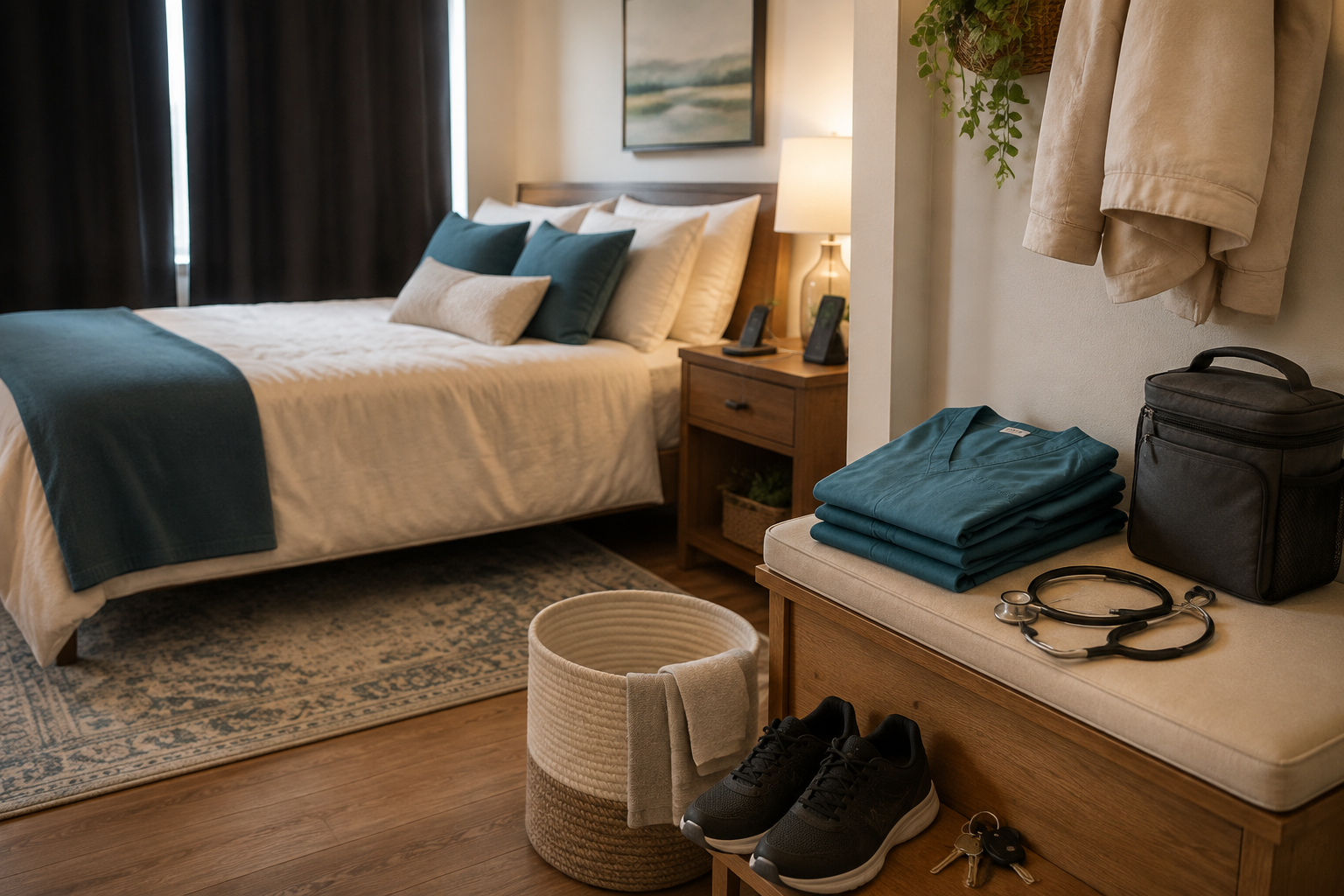
Move-in-ready furnishings. Reliable Wi-Fi, a full kitchen, laundry access, comfortable sleeping arrangements, parking, and utilities can make a listing much more practical for healthcare professionals working demanding schedules.
Clear monthly pricing. Travel nurses need to know whether utilities, parking, pets, cleaning, deposits, and platform charges are included when comparing housing against their assignment budget.
Reliable screening and payments. Hosts need a process for verifying renters, confirming assignment details when appropriate, collecting payments, and establishing clear occupancy and house rules.
For hosts new to this audience, our travel-nurse housing resources cover the fundamentals of serving healthcare professionals.
Furnished Finder Alternatives for Travel Nurses: Quick Comparison
| Platform/Channel | Stay Model | Best For | Travel-Nurse Fit | Host Model |
|---|---|---|---|---|
| ministays | 30–90+ day furnished stays | Dedicated MTR demand | Excellent | Mid-term marketplace |
| Airbnb | 28+ night monthly stays | Broad renter reach | Very good | Booking marketplace |
| Landing | Week, month, or longer | Professionally managed apartments | Very good | Managed furnished housing |
| Corporate housing providers | Usually 30+ days | Employer/agency placements | Very good | Provider-dependent |
| Apartments.com | Lease-dependent | General apartment demand | Moderate | Rental marketplace |
| Local furnished-rental operators | Usually monthly | Hospital-specific markets | Very good | Local/regional |
| Direct hospital-area marketing | Flexible | Experienced independent hosts | Excellent | Host-managed |
No platform guarantees bookings. Availability, renter demand, costs, and screening procedures vary by city and property.
1. ministays: Best Dedicated Alternative for Mid-Term Rentals for Travel Nurses
Why it ranks / Best for: ministays is a strong Furnished Finder alternative for hosts who want to reach renters specifically searching for furnished stays of 30 days or longer. Rather than competing primarily for vacation travelers, hosts can position properties around monthly housing needs.
Demand drivers: Travel nurses, allied health professionals, corporate travelers, remote workers, relocating professionals, snowbirds, and other temporary residents.
Stay length: 30–90+ days, with longer furnished stays also supported.
Context: A dedicated mid-term rental marketplace can help hosts diversify beyond a single travel-nurse-focused source while still attracting renters whose housing needs closely resemble a typical 13-week healthcare assignment.
Hosts comparing the two platforms can read how ministays compares to Furnished Finder.
2. Airbnb: Best Furnished Finder Alternative for Maximum Reach
Why it ranks / Best for: Airbnb provides broad consumer reach while supporting monthly reservations of 28 nights or longer. Hosts can configure longer minimum stays and monthly discounts, making Airbnb useful for nurses as well as other traveling professionals.
Demand drivers: Travel nurses, traveling professionals, remote workers, relocating families, business travelers, and extended-stay guests.
Number: Airbnb classifies reservations of 28 nights or more as monthly stays and collects payments monthly for qualifying longer reservations.
Context: Airbnb is not exclusively a travel nurse or mid-term rental marketplace. Hosts compete with vacation properties and should optimize the listing title, minimum stay, monthly discount, amenities, and description for healthcare professionals.
For a detailed host comparison, see how ministays stacks up against Airbnb.
3. Landing: Best for Professionally Managed Monthly Rentals for Nurses
Why it ranks / Best for: Landing is particularly useful for travel nurses who want professionally managed, move-in-ready apartments rather than dealing with an individual landlord. The company currently advertises furnished apartments across more than 250 U.S. cities.
Amenities: Full kitchens, in-unit laundry, Wi-Fi, workspaces, furnishings, and 24/7 support are among the amenities Landing advertises for extended stays.
Number: 250+ U.S. cities.
Context: Landing explicitly identifies travel nurses as one use case for its flexible-stay product. Its operating model differs from an open marketplace, so it is not necessarily a direct listing option for every independent landlord.
4. Corporate Housing Providers: Best for Agency and Employer Placements
Why it ranks / Best for: Corporate housing providers can be valuable Furnished Finder competitors when nurses, staffing companies, or healthcare employers need professionally arranged temporary accommodations.
Demand drivers: Healthcare staffing companies, hospitals, medical systems, relocation coordinators, and employers arranging temporary assignments.
Stay length: Commonly 30 days or longer, depending on the provider and assignment.
Context: Corporate housing may involve negotiated rates, invoicing requirements, or different property standards. Hosts should determine whether a provider accepts independently owned inventory and what commissions, insurance, furnishing, and availability requirements apply.
The same strategy can open your property to business travelers beyond healthcare. Our guide to marketing mid-term rentals to corporate clients explains how to position a furnished property for professional demand.
5. Apartments.com: Best for Broader Apartment Exposure
Why it ranks / Best for: Apartments.com can supplement specialized travel nurse housing sites by exposing furnished inventory to a broader pool of renters searching for apartments.
Demand drivers: Relocations, conventional renters, professionals, students, and some temporary residents.
Stay length: Property and lease dependent.
Context: Apartments.com is not designed specifically around travel nurse assignments. Hosts need to make furnished status, utilities, minimum stay, availability dates, parking, and monthly terms especially clear.
For a nurse searching for a 13-week assignment, a conventional apartment listing may also involve more lease negotiation than a property already positioned as a mid-term rental.
6. Local Furnished-Rental Operators: Best for Hospital-Specific Markets
Why it ranks / Best for: Local furnished-rental operators can perform well when they have deep inventory near major hospitals and understand healthcare assignment patterns in their market.
Demand drivers: Academic medical centers, children’s hospitals, trauma centers, teaching hospitals, outpatient facilities, and regional healthcare systems.
Stay length: Commonly 30+ days, although every operator sets its own requirements.
Context: Local providers vary substantially in quality. Hosts and renters should verify lease terms, payment procedures, utilities, deposits, cancellation rules, and the identity of the party managing the property.
For hosts, the important lesson is geographic. A property five or ten minutes from a major hospital can have a different renter profile from an otherwise comparable unit across the metropolitan area.
7. Direct Hospital-Area Marketing: Best for Experienced Hosts
Why it ranks / Best for: Direct marketing gives experienced landlords greater control over lead generation and can complement Furnished Finder and other travel nurse housing sites.
Demand drivers: Hospital systems, staffing agencies, healthcare recruiters, university medical centers, physical therapists, imaging technicians, and other traveling healthcare professionals.
Number: Target stays of 30–90+ days rather than trying to compete for nightly vacation bookings.
Context: Direct leads require the host to manage more of the process, including inquiries, screening, lease execution, payments, deposits, and compliance. Never assume that someone is a legitimate healthcare traveler simply because they claim to be on assignment.
A standardized guest screening process for mid-term rentals can help hosts qualify applicants consistently.
Furnished Finder for Nurses vs Other Housing Platforms
Furnished Finder remains highly relevant to healthcare housing. Its own 2026 guidance says travel-nurse demand is still strong but has become more competitive as nurses have joined a broader pool of renters seeking furnished housing for 30 days or longer.
That change matters for hosts. A property does not have to serve travel nurses exclusively to perform well as a mid-term rental.
A furnished unit near a hospital may also work for visiting physicians, medical residents, corporate employees, insurance-displaced families, professors, remote workers, and people relocating to the area. Diversifying both platforms and renter audiences can make occupancy less dependent on healthcare staffing cycles.
Which Furnished Finder Alternative Is Best for Travel Nurse Housing?
The strongest choice depends on what the host wants from the platform.
| Host Goal | Best Starting Point |
| Dedicated mid-term rental demand | ministays |
| Maximum overall reach | Airbnb |
| Professionally managed furnished apartments | Landing |
| Agency or employer placements | Corporate housing |
| Broader apartment exposure | Apartments.com |
| Hospital-specific local inventory | Local providers |
| Maximum host control | Direct marketing |
For many landlords, Furnished Finder alternatives for travel nurses should supplement Furnished Finder rather than automatically replace it. Multi-platform distribution can reduce reliance on one lead source while exposing the same property to other qualified monthly renters.
The key is calendar discipline. Once a 60- or 90-day reservation is accepted on one platform, availability should be updated everywhere else immediately.
How to Evaluate Travel Nurse Housing Sites
- Map nearby healthcare demand. Identify hospitals, medical centers, rehabilitation facilities, outpatient centers, and other major healthcare employers within a realistic commute.
- Calculate the true monthly price. Include furniture, utilities, Wi-Fi, parking, pets, cleaning, platform costs, vacancy, maintenance, and turnover expenses before setting rent.
- Compare qualified leads rather than listing views. Track how many inquiries match your dates, monthly rate, occupancy rules, pet policy, and screening requirements.
- Optimize for shift workers. Blackout curtains, reliable Wi-Fi, laundry, a functional kitchen, comfortable bedding, safe parking, and a quiet environment can matter more than vacation-style amenities.
- Track net revenue by source. Record completed stays, average length of stay, vacancy days, acquisition cost, and management workload for every platform.
Understanding where healthcare demand is concentrated also matters. Our guide to top travel-nurse destinations can help hosts think about the relationship between medical employment and mid-term housing demand.
How Hosts Can Make Monthly Rentals for Nurses More Competitive
Travel nurses typically need a functional home rather than a vacation experience. Hosts should prioritize a well-equipped kitchen, reliable internet, laundry, comfortable bedding, appropriate climate control, and clear information about the commute to major medical facilities.
Pricing also needs to reflect the entire assignment. A high monthly rate can leave a property vacant even when local hospitals are busy, while aggressive discounting can erase the financial advantages of a longer stay.
Hosts should compare nearby furnished inventory and use a repeatable mid-term rental pricing strategy for different lengths of stay.
Final Verdict: Furnished Finder Alternatives for Travel Nurses
The best Furnished Finder alternatives for travel nurses are platforms and channels that combine 30+ day flexibility with access to qualified professional renters. ministays is a strong option for dedicated mid-term demand, Airbnb provides broad reach, Landing offers professionally managed housing, and corporate or local channels can work well in hospital-heavy markets.
Furnished Finder itself remains relevant. The more resilient strategy for hosts is to avoid depending entirely on one marketplace and instead measure which channels generate profitable, qualified stays in their specific market.
If you have a furnished property suitable for healthcare professionals and other monthly renters, list your property on ministays.
FAQ
What are the best Furnished Finder alternatives for travel nurses?
The best Furnished Finder alternatives for travel nurses include ministays, Airbnb, Landing, corporate housing providers, Apartments.com, reputable local furnished-rental operators, and direct hospital-area marketing. The best option depends on the city, hospital proximity, assignment dates, monthly budget, amenities, and whether the renter prefers an independent landlord or managed apartment.
Is Furnished Finder still good for nurses in 2026?
Yes. Furnished Finder continues to specialize in furnished housing for stays of 30 days or longer, and travel nurses remain an important part of its renter audience. Furnished Finder reported in March 2026 that travel-nurse demand remained strong but had become more competitive for landlords.
Is Airbnb a good alternative to Furnished Finder for travel nurses?
Yes. Airbnb supports monthly reservations of 28 nights or longer and highlights longer-stay amenities such as kitchens, Wi-Fi, and workspaces. It can provide travel nurses with broad inventory and flexible dates, although it is a general travel marketplace rather than a platform dedicated specifically to healthcare or mid-term housing.
What do travel nurses look for in monthly rentals?
Travel nurses commonly benefit from reliable Wi-Fi, laundry, a functional kitchen, comfortable bedding, parking, and a manageable commute to their assigned healthcare facility. Shift schedules can also make quiet surroundings and blackout curtains valuable. Hosts should clearly disclose utilities, pet rules, deposits, fees, parking, and the actual distance to nearby hospitals.
How long do travel nurses typically need housing?
Housing needs vary by assignment, extension, and staffing contract, so hosts should not assume every nurse needs the same lease length. Mid-term platforms commonly accommodate stays beginning around 30 days, making them more flexible than annual leases when a healthcare professional needs temporary housing for an assignment.
Should hosts list on multiple travel nurse housing sites?
Yes. Using multiple travel nurse housing sites can reduce dependence on one source of inquiries and expose a property to healthcare workers plus other monthly renters. Hosts should keep calendars synchronized and compare platforms based on qualified leads, completed bookings, average stay length, vacancy, acquisition costs, and net revenue.
How should landlords screen travel nurses?
Landlords should use a consistent, legally compliant screening process for every applicant. Depending on applicable law and platform rules, that may include identity verification, rental history, income or employment information, occupancy details, and references. A travel-nurse assignment should not automatically substitute for normal due diligence or fair-housing-compliant qualification standards.