
Mid-Term Rentals Tampa: 2026 Host Guide to Demand, Rates & 7 Best Areas
Mid-term rentals Tampa hosts offer can serve healthcare professionals, military personnel, corporate travelers, relocating households, project workers, and seasonal residents seeking 30–90+ day housing. Tampa’s healthcare ecosystem, MacDill Air Force Base, corporate economy, and winter snowbird season create diversified demand. In our experience with MTRs, Tampa works best when hosts match the property and neighborhood to a specific renter segment.
What Makes a Good Mid-Term Rental in Tampa?
Proximity to major demand drivers. Properties near Tampa General Hospital, Moffitt Cancer Center, USF, MacDill Air Force Base, downtown employment, or major business districts have clearer reasons for renters to stay 30–90+ days.
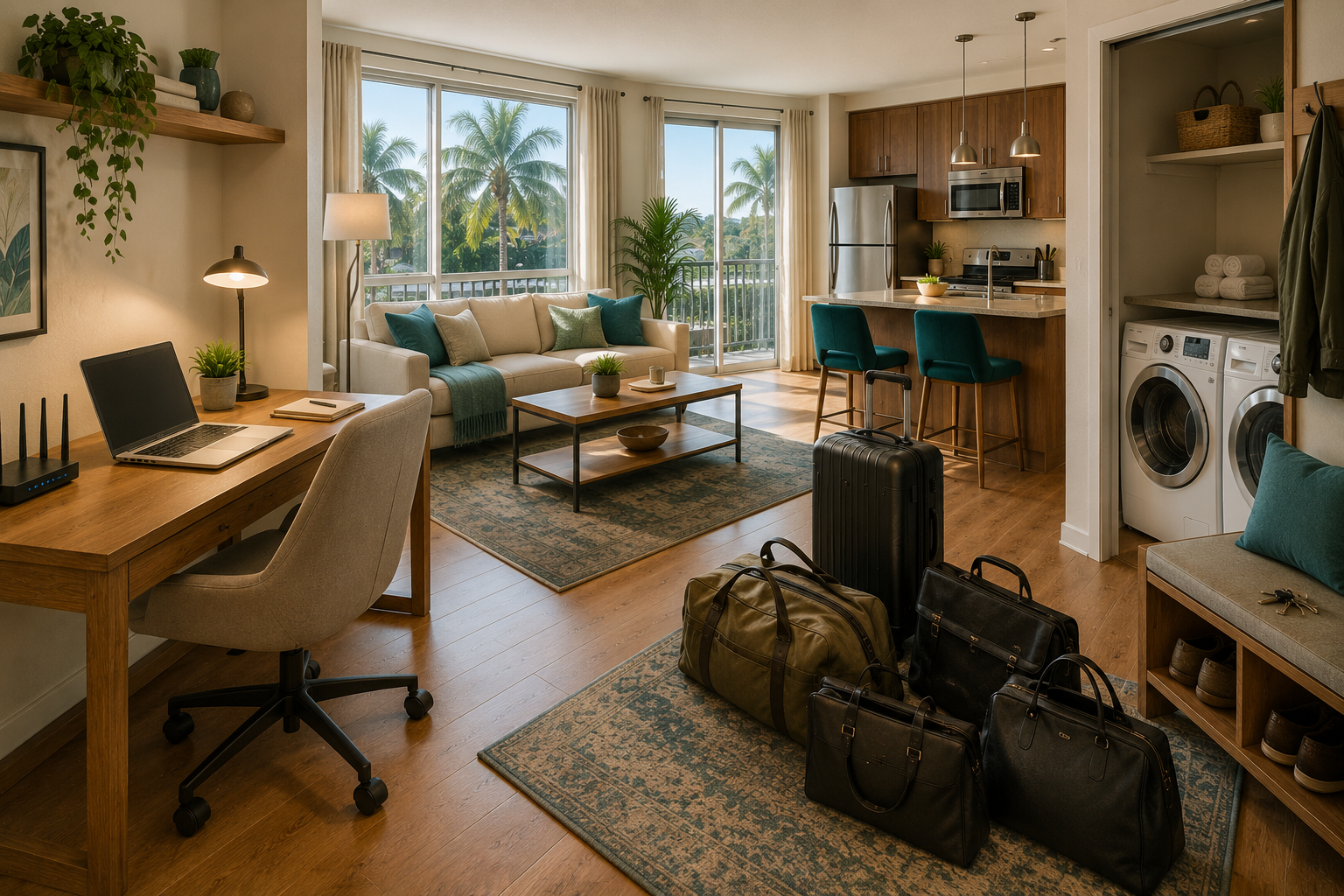
Practical monthly-living amenities. Competitive Tampa furnished rentals should provide reliable Wi-Fi, laundry, a functional kitchen, workspace, utilities, storage, and convenient parking.
Multiple renter segments. Tampa is more resilient when a property can serve healthcare workers, corporate relocations, military households, and seasonal renters rather than relying on one audience.
Season-aware pricing. Tampa’s winter demand can differ materially from its off-season market. Hosts should adjust monthly pricing and minimum stays rather than expecting one rate to work year-round.
Sound net economics. Utilities, furnishings, insurance, taxes, maintenance, vacancy, cleaning, management, and platform costs all matter. Higher furnished rent does not automatically mean higher profit.
Mid-Term Rentals Tampa: 2026 Market Snapshot
The Tampa MTR market benefits from unusually diverse sources of temporary housing demand. Healthcare and life sciences are particularly important. Tampa Bay is home to the Tampa Medical & Research District, anchored by Tampa General Hospital and the University of South Florida Health Morsani College of Medicine, while Moffitt Cancer Center is Florida’s only NCI-designated Comprehensive Cancer Center.
More than 20% of Florida’s life-sciences workforce is located in the Tampa MSA, according to the Tampa Bay Economic Development Council. That concentration can support temporary demand from clinicians, researchers, trainees, healthcare executives, and relocating professionals.
Tampa also benefits from military, corporate, industrial, university, and seasonal demand. The industrial market had generated nearly 1.8 million square feet of positive net absorption since early 2025 by Q2 2026, another indicator of ongoing business activity in the metro.
| Renter Segment | Tampa Demand Drivers | Potential Stay Need |
|---|---|---|
| Healthcare | Tampa General, Moffitt, USF Health | Assignments, training, relocation |
| Military | MacDill Air Force Base | PCS, TDY, contractors |
| Corporate | Downtown, Westshore, major employers | Relocation, projects |
| University | University of South Florida | Faculty, researchers, visitors |
| Snowbirds | Florida winter season | 1–6 month seasonal stays |
| Project workers | Construction, industrial, infrastructure | Temporary assignments |
| Relocating households | Tampa Bay employment growth | Housing between moves |
For hosts comparing Tampa with other markets, see our guide to top U.S. cities for mid-term rentals.
Why Tampa MTR Market Demand Is Diversified
Tampa MTR market demand is attractive because it does not depend entirely on tourism. Healthcare, military activity, corporate relocations, universities, project work, and seasonal residents can each generate longer stays.
Healthcare is one of the clearest structural drivers. The Tampa Medical & Research District links Tampa General Hospital and USF Health, while the wider region includes Moffitt Cancer Center and other major healthcare organizations.
MacDill Air Force Base creates another distinct renter category. Military personnel, contractors, families in transition, and temporary assignments may need furnished housing with different lease lengths and priorities than leisure visitors.
Tampa also has a seasonal advantage. Winter residents frequently stay for weeks or months rather than a few nights, making Tampa snowbird rentals a natural fit with furnished monthly housing. Current Tampa Bay market reporting identifies January through March as a particularly strong seasonal window.
That diversification is important for hosts because it creates opportunities to reposition a listing when one renter segment slows.
Tampa Furnished Rental Rates in 2026
There is no single reliable citywide monthly rate for all Tampa furnished rentals. Pricing changes considerably by neighborhood, bedroom count, season, parking, utilities, amenities, pet policy, furnishing quality, and proximity to employment centers.
Current monthly inventory confirms that Tampa Bay has an active market for furnished stays of a month or longer, but individual listing prices vary too widely to responsibly turn them into one guaranteed market rate.
Hosts should research live comparable properties before setting their price:
| Property Type | 2026 Monthly Rate |
|---|---|
| Furnished studio | [add current neighborhood-specific comp range] |
| Furnished 1-bedroom | [add current neighborhood-specific comp range] |
| Furnished 2-bedroom | [add current neighborhood-specific comp range] |
| Furnished 3-bedroom/home | [add current neighborhood-specific comp range] |
For each comp, match bedroom count, neighborhood, parking, furnishings, utilities, pet policy, workspace, laundry, and minimum stay.
Seasonality also deserves attention. Tampa Bay’s winter market is strongest from roughly January through March, while September and October can be materially softer in vacation-oriented inventory. MTR patterns will not perfectly mirror vacation rentals, but the seasonal cycle is still relevant when underwriting Tampa monthly rentals.
Use our mid-term rental pricing strategy to convert comparable listings into a sustainable monthly rate.
7 Best Areas for Mid-Term Rentals Tampa Hosts Should Research
1. South Tampa: Best for MacDill and Professional Renters
Why it ranks / Best for: South Tampa is one of the strongest areas to investigate for military households, professionals, healthcare renters, and relocating families because of its access to MacDill and central Tampa.
Demand drivers: MacDill Air Force Base, Tampa General Hospital, downtown Tampa, professional employment, and South Tampa amenities.
Demand number: 30–90+ days can fit the needs of temporary assignments and relocating households while reducing the turnover associated with nightly stays.
Context: South Tampa contains multiple neighborhoods with substantially different pricing. Hosts should evaluate the exact commute, flood exposure, insurance costs, parking, and competing furnished inventory.
For mid-term rentals Tampa hosts targeting military personnel, practical features such as parking, laundry, pet policies, and family-friendly layouts can matter more than vacation-style amenities.
2. Downtown Tampa & Channelside: Best for Corporate Renters
Why it ranks / Best for: Downtown and Channelside are strong areas to research for executives, consultants, relocating employees, and professionals who want walkability and proximity to central employment.
Demand drivers: Downtown employers, Water Street Tampa, Tampa General Hospital access, professional services, convention activity, and corporate relocations.
Demand number: Tampa’s broader industrial economy had recorded nearly 1.8 million square feet of positive net absorption since early 2025 by Q2 2026, while the city’s healthcare and life-sciences ecosystem continues to expand.
Context: Condominiums may have HOA or building-specific rental restrictions. Verify minimum lease lengths before underwriting a furnished unit.
Premium locations may support higher Tampa furnished rentals pricing, but HOA fees and acquisition costs can also reduce returns.
3. Hyde Park: Best for Premium Furnished Monthly Rentals
Why it ranks / Best for: Hyde Park can appeal to higher-budget professionals, medical renters, executives, couples, and relocating households seeking a residential setting near central Tampa.
Demand drivers: Tampa General Hospital, downtown employment, professional services, University of Tampa, and South Tampa businesses.
Demand number: Monthly furnished inventory is actively marketed in Hyde Park and surrounding Tampa neighborhoods, confirming an established 30+ day rental category.
Context: Higher acquisition costs mean hosts should calculate the actual furnished premium after utilities, insurance, taxes, maintenance, and vacancy.
Hyde Park can work particularly well when a renter values neighborhood quality and location enough to pay for convenience over a multi-month stay.
4. Westshore: Best for Business Travelers
Why it ranks / Best for: Westshore is worth researching for corporate renters because of its office concentration, airport access, transportation links, and proximity to central Tampa.
Demand drivers: Westshore Business District, Tampa International Airport, corporate offices, aviation professionals, consultants, and relocating employees.
Demand number: For a 30–90 day renter, reducing the daily commute can be more valuable than being close to Tampa’s tourist attractions.
Context: Properties near major roads can provide excellent access but may differ significantly in noise, walkability, and residential feel.
For corporate-focused Tampa monthly rentals, reliable Wi-Fi, workspace, parking, and a straightforward all-inclusive monthly price can be important differentiators.
Hosts serving corporate renters can also use our guide to marketing mid-term rentals to corporate clients.
5. USF & North Tampa: Best for Healthcare and University Demand
Why it ranks / Best for: North Tampa offers one of the clearest institutional-demand clusters for healthcare professionals, researchers, university visitors, and medical trainees.
Demand drivers: University of South Florida, USF Health Morsani College of Medicine, Moffitt Cancer Center, James A. Haley Veterans’ Hospital, and healthcare-related organizations.
Demand number: More than 20% of Florida’s life-sciences workforce resides in the Tampa MSA, reinforcing the importance of healthcare and research to the region’s employment base.
Context: Hosts should optimize around commute time to the renter’s actual facility. “Near Tampa” is less useful than being within a practical commute of Moffitt, USF, or another specific institution.
This area is particularly compelling for hosts targeting travel clinicians and medical professionals.
6. Seminole Heights: Best for Value Near Central Tampa
Why it ranks / Best for: Seminole Heights can offer a more residential alternative to Downtown or Hyde Park while remaining accessible to central employment and healthcare demand.
Demand drivers: Downtown Tampa, healthcare employers, local businesses, relocating professionals, and project workers.
Demand number: Tampa’s MTR opportunity spans stays from roughly one month to several months, allowing hosts to target renters who prioritize neighborhood living rather than hotel-style accommodation.
Context: Property quality and block-level location vary. Hosts should evaluate parking, commute time, insurance, furnishing quality, and comparable monthly inventory carefully.
Seminole Heights can be useful for landlords seeking a balance between central access and a less premium acquisition basis.
7. Carrollwood: Best for Families and Longer Relocations
Why it ranks / Best for: Carrollwood can suit families, relocating professionals, medical households, and renters who need more space and parking for longer stays.
Demand drivers: North Tampa healthcare facilities, USF-area institutions, corporate employment, family relocations, and access to major roadways.
Demand number: Longer 60–90+ day stays can favor larger units and homes where renters need storage, laundry, parking, and functional living space.
Context: Commute times become important during peak traffic. Hosts should market the property toward specific employment centers rather than simply describing it as “central Tampa.”
Larger furnished homes may compete differently from downtown apartments, giving Carrollwood hosts another segment of the Tampa MTR market.
Best Tampa Areas by Mid-Term Renter Type
| Renter Type | Areas to Research |
|---|---|
| Travel nurses & clinicians | USF/North Tampa, Hyde Park, South Tampa |
| Military households | South Tampa |
| Corporate travelers | Westshore, Downtown, Channelside |
| Executives | Hyde Park, Downtown |
| University visitors | USF/North Tampa |
| Relocating families | Carrollwood, South Tampa |
| Snowbirds | South Tampa, Carrollwood, broader Tampa Bay |
| Project workers | Westshore, Seminole Heights |
The right area depends on the renter. Someone assigned to Moffitt Cancer Center has different priorities from a corporate employee working in Westshore or a military household reporting to MacDill.
Tampa Snowbird Rentals: How Seasonal Demand Fits MTRs
Tampa snowbird rentals can complement traditional mid-term demand because many seasonal residents naturally want furnished housing for one to several months.
Winter is the key period. Tampa Bay market reporting identifies January through March as the primary seasonal peak, with seasonal visitors commonly arriving from colder parts of the United States and Canada.
That creates an interesting opportunity for MTR hosts. A property might serve corporate, healthcare, or relocation renters for much of the year and pivot toward longer seasonal residents during winter.
Hosts should still model the entire year. Strong winter rates do not compensate automatically for extended off-season vacancy.
Florida tax treatment also depends on lease structure and duration, so hosts should verify current state and local tax requirements rather than assuming every monthly stay is treated like a conventional annual lease.
Is Tampa Good for Travel Nurse Housing?
Yes, Tampa has strong structural healthcare demand, making medical professionals an important audience for furnished mid-term housing.
The Tampa Medical & Research District is anchored by Tampa General Hospital and USF Health Morsani College of Medicine. The region also includes Moffitt Cancer Center, a major cancer research and treatment institution.
For hosts, however, “healthcare demand” should not be treated as a guarantee of travel-nurse bookings. Staffing levels fluctuate, and medical renters compare price, commute, parking, laundry, Wi-Fi, pet policies, and furnished competition.
A more resilient strategy is to make the property work for nurses, visiting clinicians, researchers, medical trainees, patients’ families, and corporate renters.
Hosts interested in this audience can explore our travel nurse housing resources.
Tampa Mid-Term Rental Regulations in 2026
Tampa hosts should verify zoning, business-tax, HOA, lease, insurance, and landlord-tenant requirements before accepting 30+ day stays.
One clear current requirement is Tampa’s business tax. The City states that owners or agents renting houses, apartments, rooming houses, and similar residential property for private gain must obtain a Business Tax Receipt and pay applicable business taxes. Tampa repealed its separate rental-certificate/registration requirement in 2023, but the business-tax obligation remains.
Regulatory research is especially important in 2026 because Tampa is in the process of updating its Land Development Code through the multi-year Tampa Forward initiative.
HOAs and condominium associations can impose additional lease-length or approval rules even when a stay otherwise complies with city requirements.
Hosts should therefore confirm the current rules for the exact property before listing it.
How to Evaluate Mid-Term Rentals Tampa Properties
- Choose your renter segment first. Decide whether the property is best positioned for healthcare workers, MacDill personnel, corporate relocations, snowbirds, project workers, or families between homes.
- Map the real commute. Measure travel times to Tampa General, Moffitt, USF, MacDill, Westshore, Downtown, or another specific demand generator during actual commuting hours.
- Research monthly furnished comps. Compare similar bedrooms, location, utilities, parking, pet policies, furnishings, workspace, laundry, and minimum stay.
- Model seasonal occupancy. Calculate conservative winter and off-season scenarios instead of assuming peak rates for 12 months.
- Calculate net income and verify rules. Deduct utilities, insurance, taxes, furniture, maintenance, cleaning, vacancy, financing, management, and platform costs, then confirm local and building-level requirements.
Our landlord’s guide to mid-term rentals provides a broader framework for evaluating the operating model.
Are Mid-Term Rentals Tampa Hosts Operate a Good Investment?
Mid-term rentals Tampa hosts operate can make sense when a property sits close to a durable demand generator and its furnished premium covers the additional operating costs.
Tampa’s advantage is diversification. Healthcare and life sciences provide institutional demand. MacDill supports military-related housing. Downtown and Westshore contribute corporate renters. USF generates university and research stays. Snowbirds add a seasonal audience.
But a strong market cannot fix weak property economics. Florida insurance costs, HOA fees, utilities, financing, furnishings, vacancy, and maintenance can materially affect returns.
Hosts should therefore underwrite Tampa furnished rentals using conservative annual occupancy rather than peak winter performance.
Final Verdict: Mid-Term Rentals Tampa in 2026
Mid-term rentals Tampa landlords offer have a compelling 2026 demand story because healthcare, military, corporate, university, relocation, and snowbird renters can all need furnished housing for a month or longer.
South Tampa stands out for MacDill and professional demand. Westshore and Downtown are worth researching for corporate renters. USF/North Tampa has a strong healthcare and university case, while Hyde Park, Seminole Heights, and Carrollwood serve different professional and family-oriented segments.
The key is not simply owning a furnished property in Tampa. Hosts should position each unit around a specific demand generator, compare genuine monthly competitors, account for seasonality, and calculate net returns after all operating expenses.
Ready to reach renters looking for 30+ day housing? List your Tampa property on ministays and market your furnished rental to monthly renters.
FAQ
Are mid-term rentals in Tampa in demand in 2026?
Mid-term rentals Tampa renters use benefit from several demand sources, including healthcare, military assignments, corporate relocation, universities, project work, and seasonal residents. Tampa’s healthcare ecosystem includes Tampa General Hospital, USF Health, and Moffitt Cancer Center, while MacDill Air Force Base adds another distinct source of temporary-housing demand.
What are the best areas in Tampa for mid-term rentals?
South Tampa, Downtown/Channelside, Hyde Park, Westshore, USF/North Tampa, Seminole Heights, and Carrollwood are areas hosts should research. The best location depends on the target renter. Healthcare professionals may prioritize Moffitt or Tampa General access, while military and corporate renters may prioritize MacDill, Westshore, or Downtown.
How much do Tampa furnished rentals cost per month?
There is no reliable single monthly rate for all Tampa furnished rentals. Prices vary by neighborhood, bedroom count, season, utilities, parking, pet policies, amenities, and furnishing quality. Hosts should compare current 30+ day listings matching their property rather than using nightly vacation rates or unfurnished annual leases as direct MTR comps.
Is Tampa good for travel nurse housing?
Yes. Tampa’s healthcare and life-sciences ecosystem includes Tampa General Hospital, Moffitt Cancer Center, USF Health, and other major healthcare organizations. More than 20% of Florida’s life-sciences workforce resides in the Tampa MSA. Hosts should still verify current staffing demand and competition around the specific medical facility they plan to target.
When is demand highest for Tampa snowbird rentals?
Winter is the primary season for Tampa snowbird rentals, with January through March particularly important for seasonal demand. Snowbirds may stay for one to several months, making them compatible with furnished monthly housing. Hosts should price seasonally while also planning for softer periods rather than projecting peak winter performance across the entire year.
Do Tampa landlords need a license for a mid-term rental?
Requirements depend on the property and rental structure. The City of Tampa states that owners or agents renting residential property for private gain must obtain a Business Tax Receipt and pay applicable business taxes. HOA, condominium, zoning, insurance, tax, and landlord-tenant requirements may also apply, so hosts should verify current property-specific rules.
What amenities should Tampa monthly rentals include?
Competitive Tampa monthly rentals should generally provide reliable Wi-Fi, utilities, laundry, a complete kitchen, comfortable furniture, workspace, storage, and practical parking. Pet-friendly policies can broaden demand. For 30–90+ day renters, a good mattress, functional kitchen, laundry, storage, and convenient commute usually matter more than vacation-style extras.